Microsoft Agent 365 GA: AI Agent Governance Becomes a Procurable Product
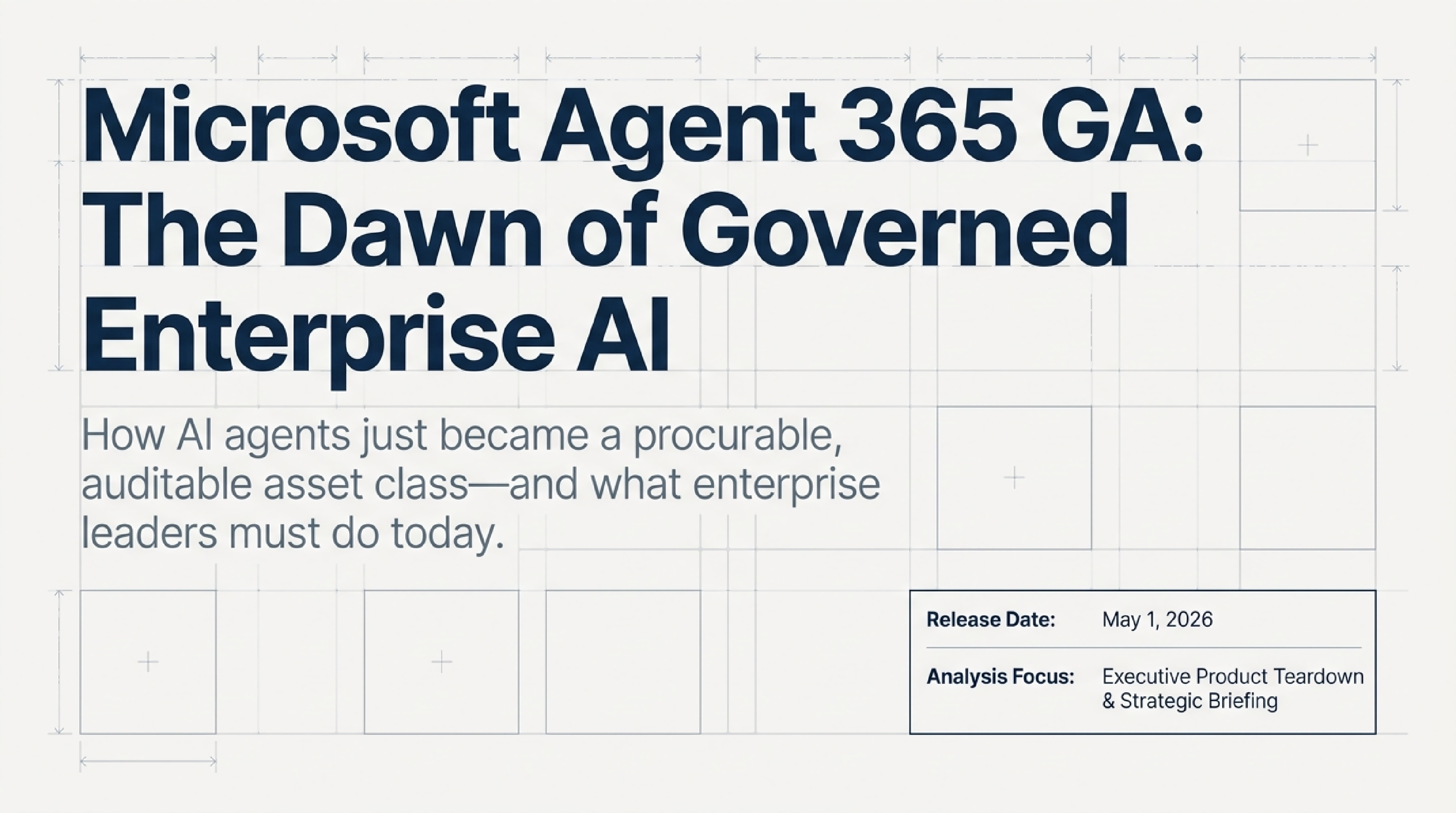
Microsoft Agent 365 reached general availability on May 1 at $15 per user per month, packaging identity, governance, and security for enterprise AI agents. Here is what it actually does, how it compares, and what readers can do today.
By Marcus Wong, Insightful AI Desk
Microsoft’s Agent 365 reached general availability on May 1, 2026, packaging identity, governance, security, and lifecycle management for AI agents into a single 15 USD-per-user-per-month SKU. The launch, announced by CEO Satya Nadella and described in Microsoft’s own security blog, is the company’s bid to convert “shadow AI” inside enterprises into a governed asset class that IT and compliance teams can actually audit.
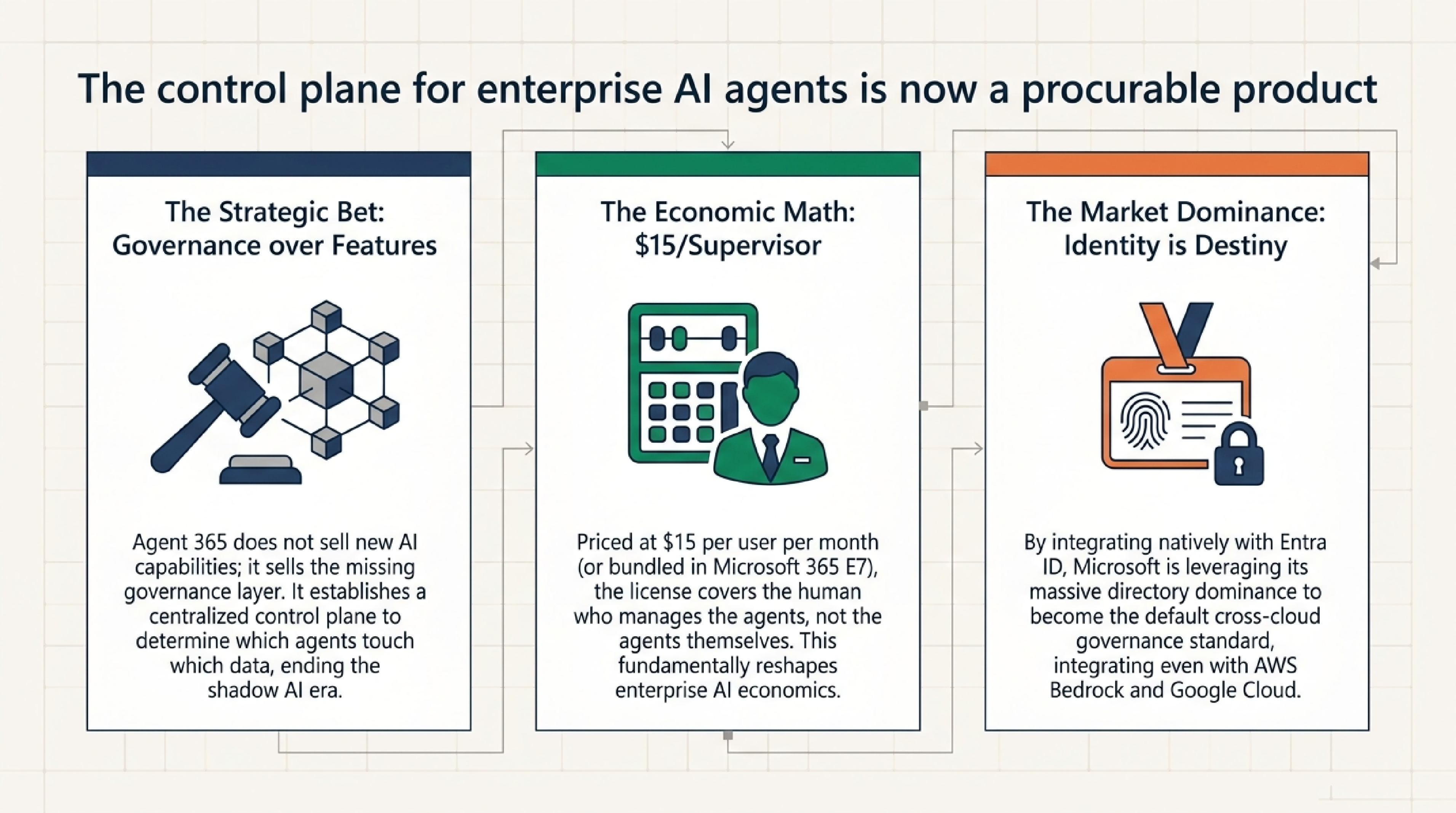
The product is more interesting as a control-plane bet than as a feature release. Agent 365 is not selling new AI capability; it is selling the governance layer that determines which agents touch which data, under what permissions, with what audit trail. For enterprises trying to operationalize AI agents at scale, this is the layer whose absence has been the binding constraint.
What Agent 365 actually does
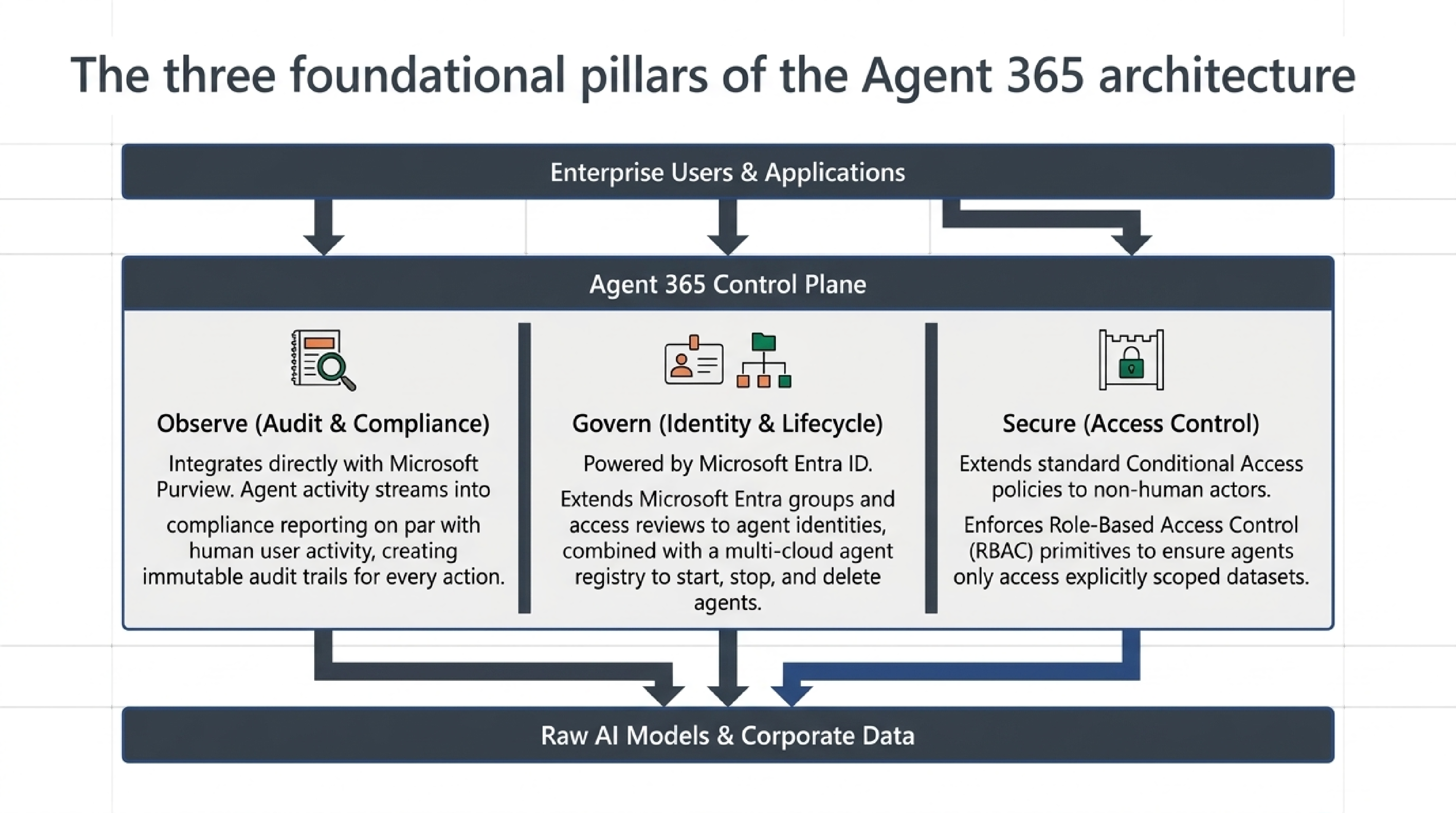
Per Microsoft’s own description, Agent 365 sits on three pillars the company calls observe, govern, secure. The specific capabilities at GA:
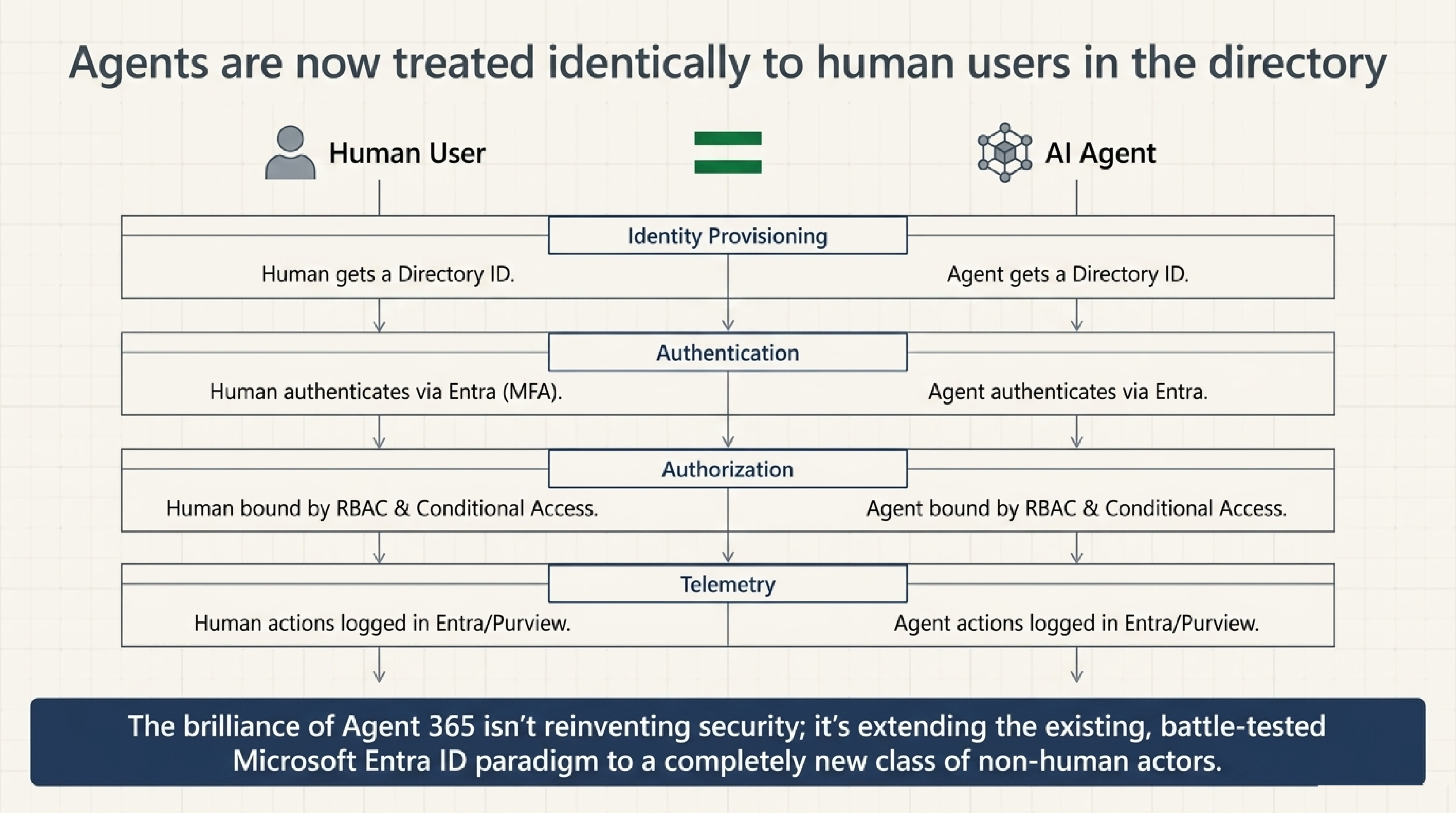
- Microsoft Entra ID for agents. Every AI agent gets a directory identity, authenticates through Entra, and has its actions logged in the same way human user actions are logged. Conditional access policies, multi-factor requirements (where relevant), and role-based access apply.
- Role and permission assignment. Agents get scoped access via the same RBAC primitives used for human users. The same Microsoft Entra groups, conditional access policies, and access reviews extend to agent identities.
- Audit trails. Agent activity flows into compliance and audit reporting on par with user activity. Microsoft Purview, the company’s data governance product line, integrates the agent activity stream.
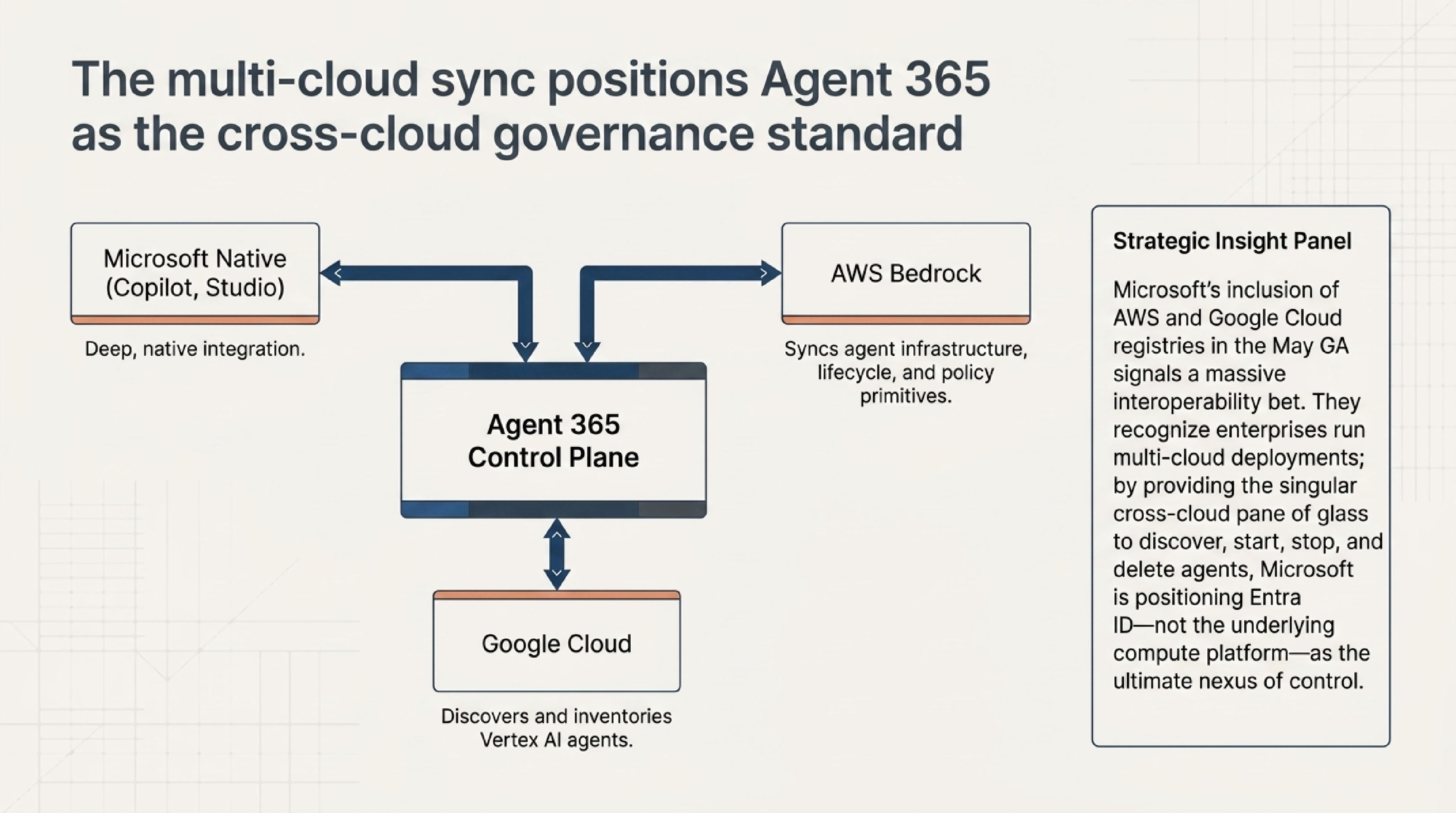
- Multi-cloud agent registry. Public preview of registry synchronization with AWS Bedrock and Google Cloud agents. IT teams can discover, inventory, and (incrementally) perform lifecycle governance — start, stop, delete — on agents running on other clouds, from a single Microsoft control plane.
The upcoming capabilities Microsoft has telegraphed for public preview in June 2026:
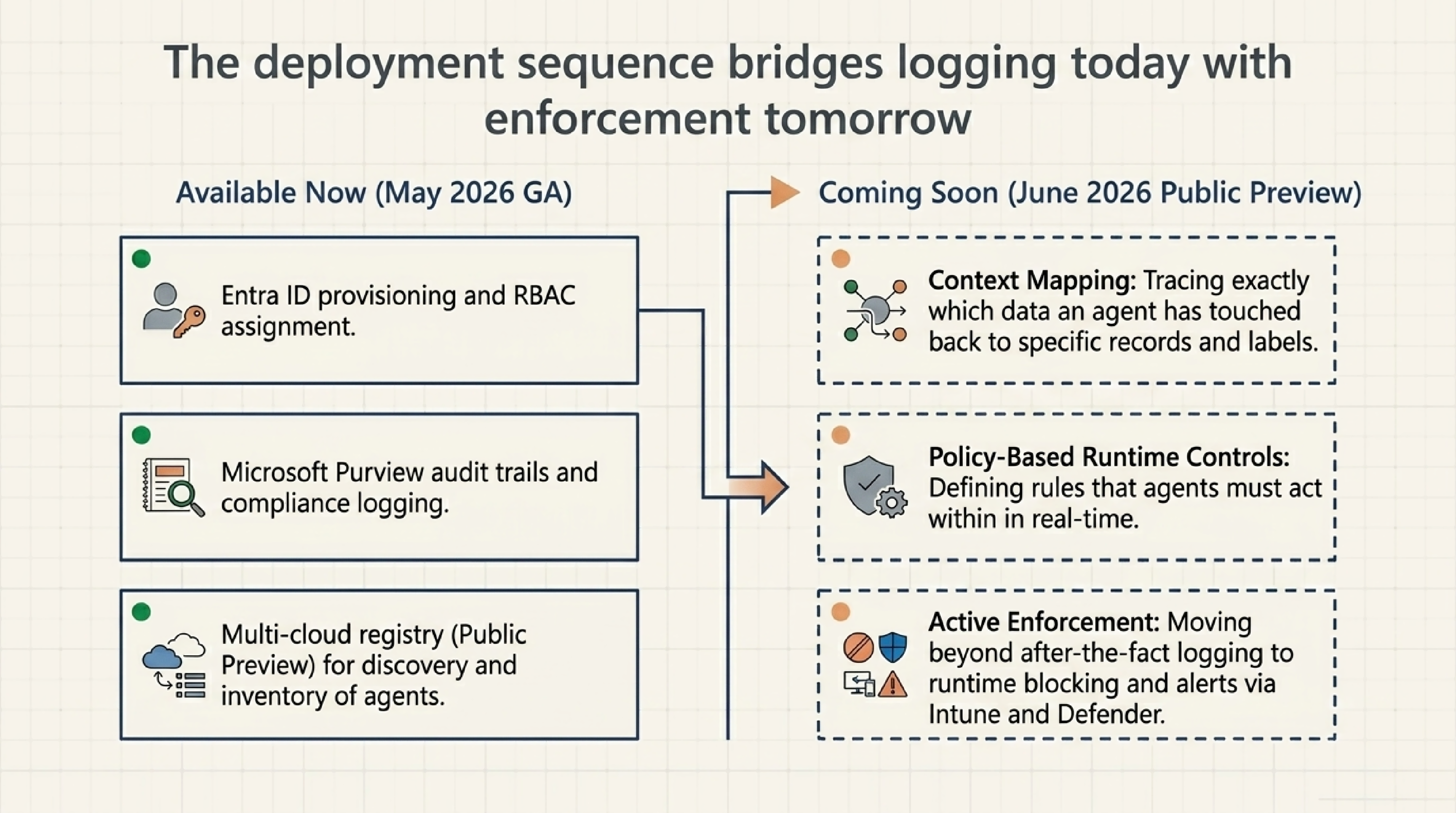
- Context mapping (which data an agent has touched, traced back to specific records and labels)
- Policy-based runtime controls (define rules, agents act within them)
- Runtime blocking and alerts through Intune and Defender (active enforcement rather than after-the-fact logging)
Pricing and the per-user model
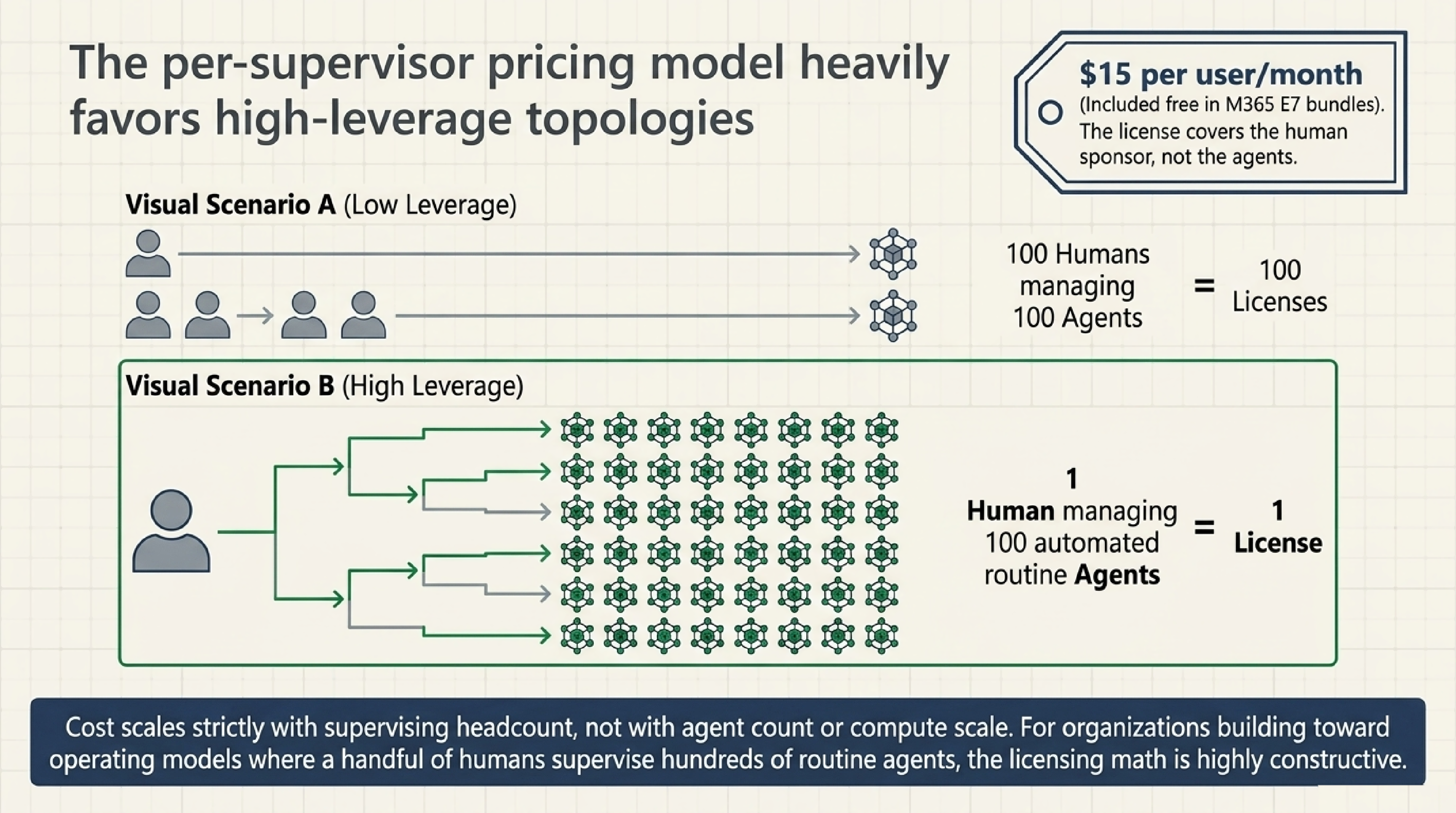
Agent 365 is priced at 15 USD per user per month standalone, or bundled in Microsoft 365 E7. The licensing detail worth noting: each license covers the human who manages, sponsors, or directly uses the agent — not the agents themselves. An organization deploying 1,000 agents in support of 100 employees pays for 100 licenses, not 1,100.
This structure is favorable for high-leverage agent topologies (many agents per human operator) and less favorable for one-to-one human-agent pairing models. For organizations building toward an operating model where a handful of humans supervise hundreds of routine agents, the licensing math is constructive: the cost scales with the supervising headcount, not with agent count.
For enterprises already on Microsoft 365 E7, Agent 365 is included in the bundle. This is a meaningful procurement signal: the friction to add Agent 365 to existing M365 deployments is low, which positions the product to become the default governance layer in Microsoft-aligned environments more quickly than a standalone product would.
The shadow-AI problem Agent 365 addresses
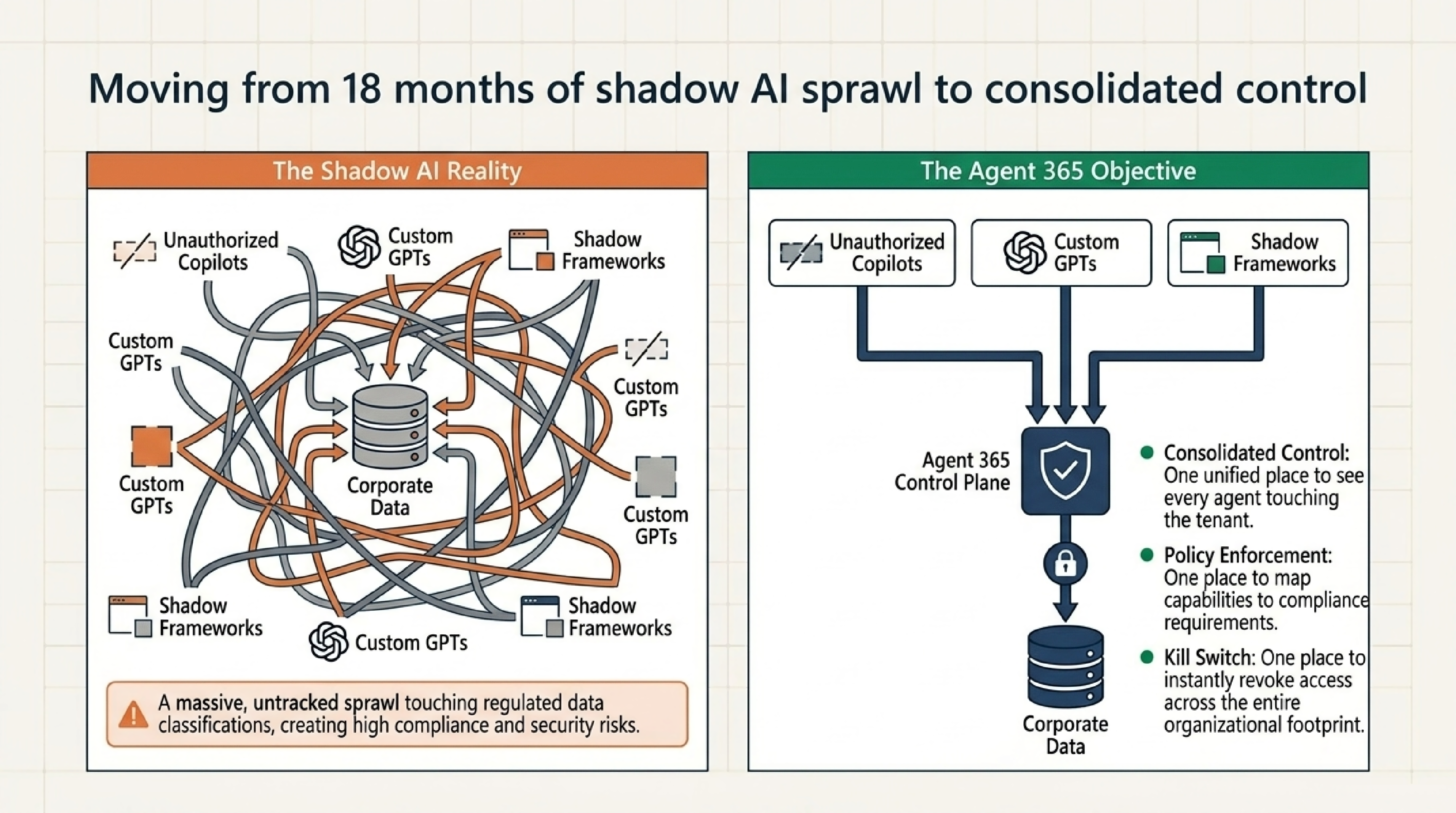
Enterprise IT has spent the last 18 months discovering that employees deploy Copilots, custom GPTs, and unauthorized agent frameworks against corporate data without sanctioned controls. The combination is significant in aggregate: an enterprise survey landscape that has been widely reported finds the majority of large organizations have material shadow-AI activity, often touching regulated data classifications.
Agent 365’s value proposition is not new capability but consolidated control: one place to see every agent touching the tenant, one place to revoke access, one place to enforce policy. The product’s relevance depends on whether IT teams adopt it as the inventory and policy plane for both Microsoft-native agents (Copilot, Copilot Studio) and third-party agent platforms.
The Bedrock and Google Cloud registry integrations matter precisely because they signal that Microsoft is positioning Agent 365 as the cross-cloud governance layer, not just the Microsoft-only control plane. If the integrations work practically — and that question will be visible in the June 2026 public preview — the addressable market is enterprises broadly, not just Microsoft-centric ones.
How Agent 365 compares to the alternatives
The agent governance category is emerging across the major cloud providers and enterprise software vendors. A brief comparison:
Google Cloud’s Vertex AI Agent Governance. Native to Vertex AI, integrated with Google’s own identity and IAM stack. Strong on multimodal model integration; less integrated with non-Google workloads.
AWS Bedrock agent management. Bedrock’s agent infrastructure includes lifecycle and policy primitives, integrated with AWS IAM. Strong on AWS-native deployments; the AWS-Microsoft Agent 365 registry sync indicates AWS sees value in interoperability rather than insisting on AWS-only governance.
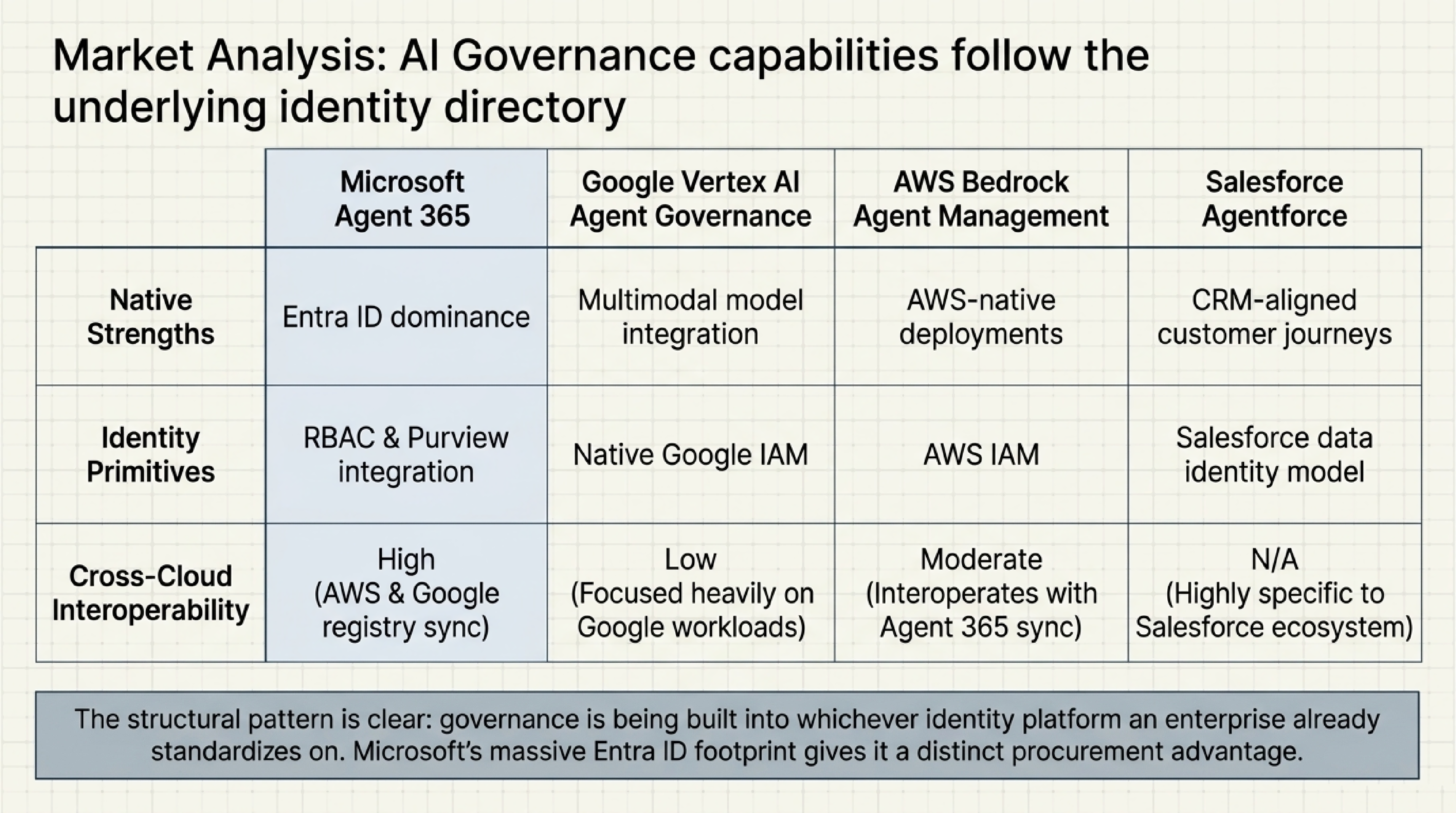
Salesforce Agentforce. Agent product for the Salesforce-centric customer journey, with governance integrated into Salesforce’s existing data and identity model. Strong for CRM-aligned workloads; less applicable to general enterprise agent governance outside the Salesforce platform.
ServiceNow, SAP, and other ERP/ITSM platforms. Each is building agent governance into its existing identity and workflow primitives. Strong for the workloads native to those platforms.
The structural pattern: governance is being built into the identity and workflow platform that each enterprise already standardizes on. Microsoft’s positioning — Entra ID is the directory of record for a large share of global enterprises — gives Agent 365 a procurement advantage in those environments. In organizations where the identity stack is centered elsewhere, the comparable governance layer will likely come from that stack’s vendor.
The interesting question is cross-platform interoperability. The Bedrock and Google Cloud registry sync is the early signal. Enterprises with multi-cloud agent deployments need a control plane that can see across clouds. Whether Agent 365 evolves into that cross-cloud plane, or whether a parallel multi-vendor standard emerges, is the open question of the next 18 months.
Where the leverage is
The Agent 365 GA creates concrete openings across several reader groups.
For enterprise IT and security leaders. If your organization is on Microsoft 365 E7, Agent 365 is included — the question is whether to deploy it now or wait for the June public preview features. The case for deploying now: inventory and policy mapping benefit from earlier adoption, even with runtime enforcement still ahead. Three practical asks for your account team: confirm Agent 365’s availability in your tenant configuration, scope a pilot for one department’s agent inventory, and ask about timeline visibility on the Intune/Defender runtime controls in June. For non-E7 environments, the standalone 15 USD-per-user pricing makes a focused pilot affordable.
For agent platform builders. The Agent 365 announcement effectively makes Entra ID the identity layer for AI agents in Microsoft-aligned enterprises. Agent platforms that integrate with Entra natively will move through enterprise procurement faster than those that don’t. For platform builders, the practical question is whether to invest in Entra integration as a first-class capability or treat it as one integration among many. For Microsoft-centric customer bases, the first option is the higher-leverage bet.
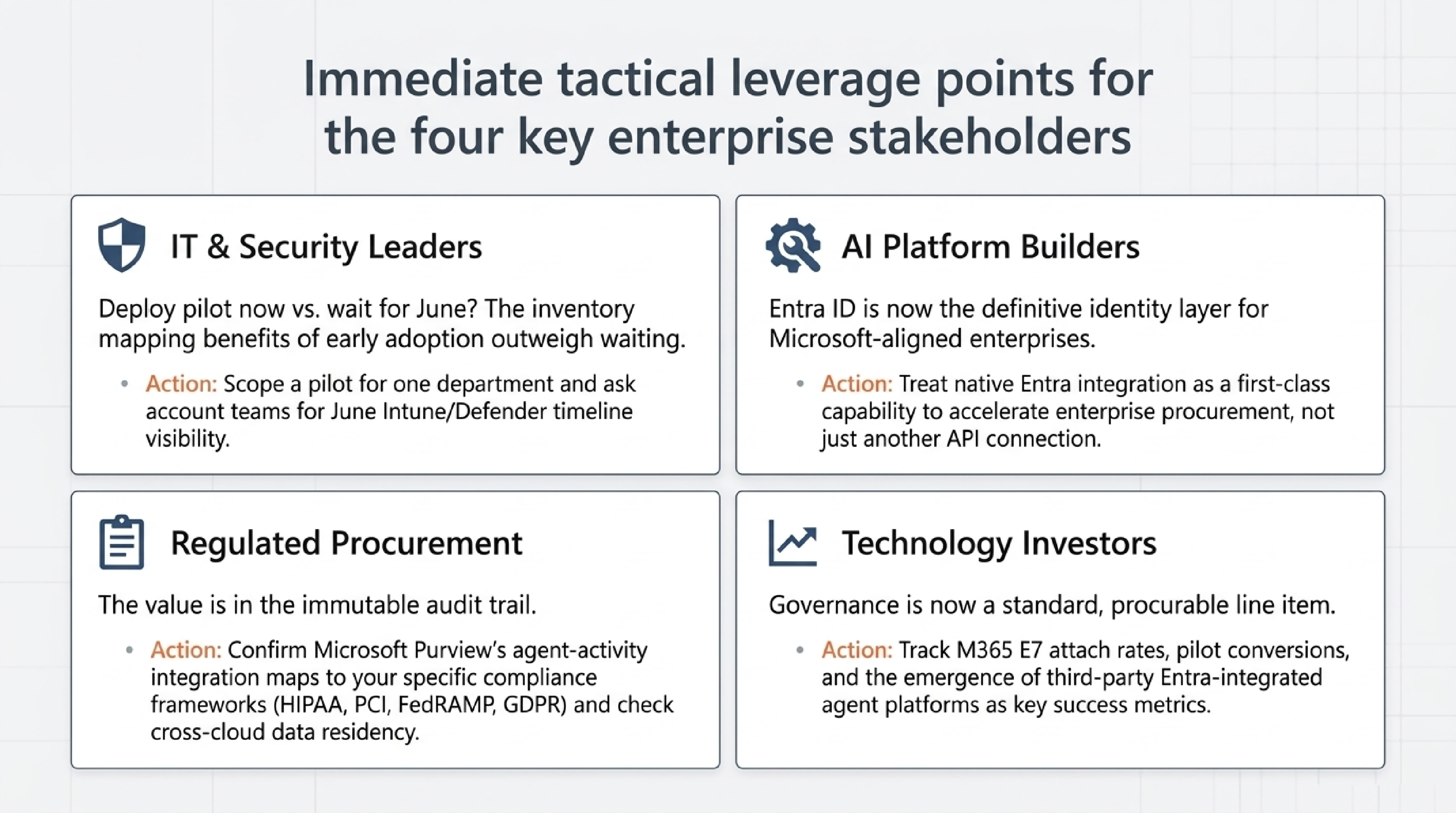
For Microsoft procurement teams in regulated industries. The audit and compliance integration via Microsoft Purview is the more interesting feature for healthcare, financial services, and government enterprise customers. Three asks specifically for regulated-industry procurement: confirm Purview’s agent-activity integration covers your compliance frameworks (HIPAA, PCI, FedRAMP, GDPR), understand the data residency story for cross-cloud registry sync, and verify the audit trail retention defaults match your regulatory retention requirements.
For investors tracking enterprise AI governance. Agent 365 is a vehicle for Microsoft to make enterprise AI governance a standard procurement line item. Tracking adoption metrics (pilot conversion, M365 E7 attach rates, third-party Entra-integrated agent platforms) will indicate whether the governance-as-product positioning is working. Comparable announcements from Google, AWS, and Salesforce in the next 6-12 months will reveal whether agent governance becomes a single-vendor or multi-vendor market.
What is worth doing, and what is worth watching
For enterprise teams beginning to operationalize AI agent governance, three workflow patterns are reachable today.
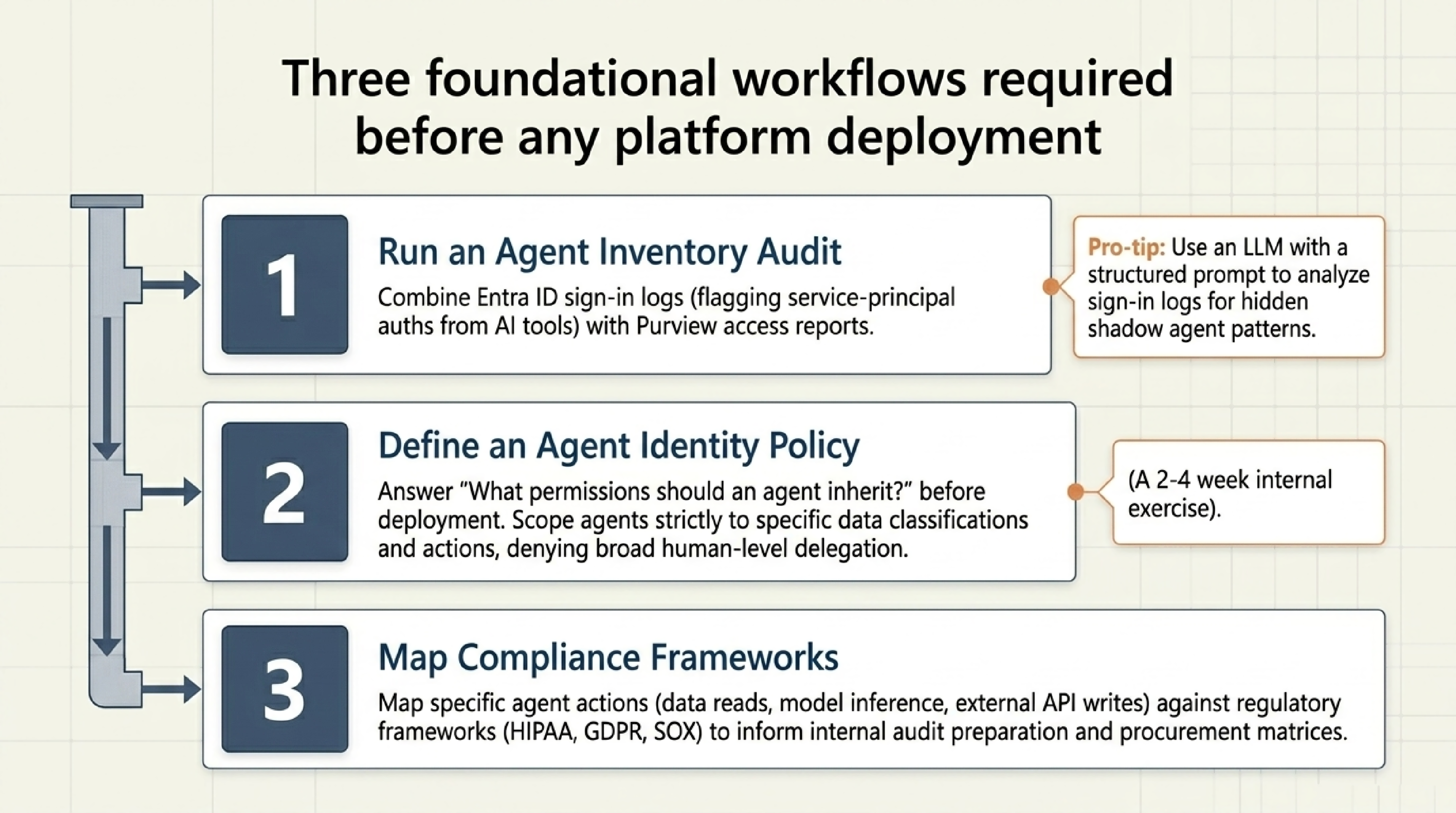
1. Run an agent inventory audit. Most enterprises do not know how many AI agents are operating in their environment. A first-pass inventory can be done in days by combining Entra ID sign-in logs (looking for service-principal authentications from AI tooling), Microsoft Purview’s data access reports, and survey responses from line-of-business owners. Use an LLM with a structured analysis prompt to identify patterns in the sign-in logs that suggest unmanaged agent activity. This is the work that needs to happen regardless of which governance product the enterprise eventually adopts.
2. Define an agent identity policy. Before Agent 365 (or any equivalent) is deployed, the enterprise needs an answer to the question “what permissions should an agent inherit from its sponsoring human user?” The defensible answer is usually narrower than the sponsoring user’s full access — agents should be scoped to specific data classifications and specific actions, not granted broad delegation. Drafting this policy is a 2-4 week exercise that pays back across whichever governance product ends up deployed.
3. Map your compliance frameworks to agent activity types. For regulated industries, map the agent action types (data access, model inference, external API calls, data writes) to the compliance frameworks that govern them (HIPAA, PCI, GDPR, SOX). The output is a matrix that informs both procurement of governance products and internal audit preparation. Microsoft Purview’s standard mappings can be a starting point but need enterprise-specific tuning.
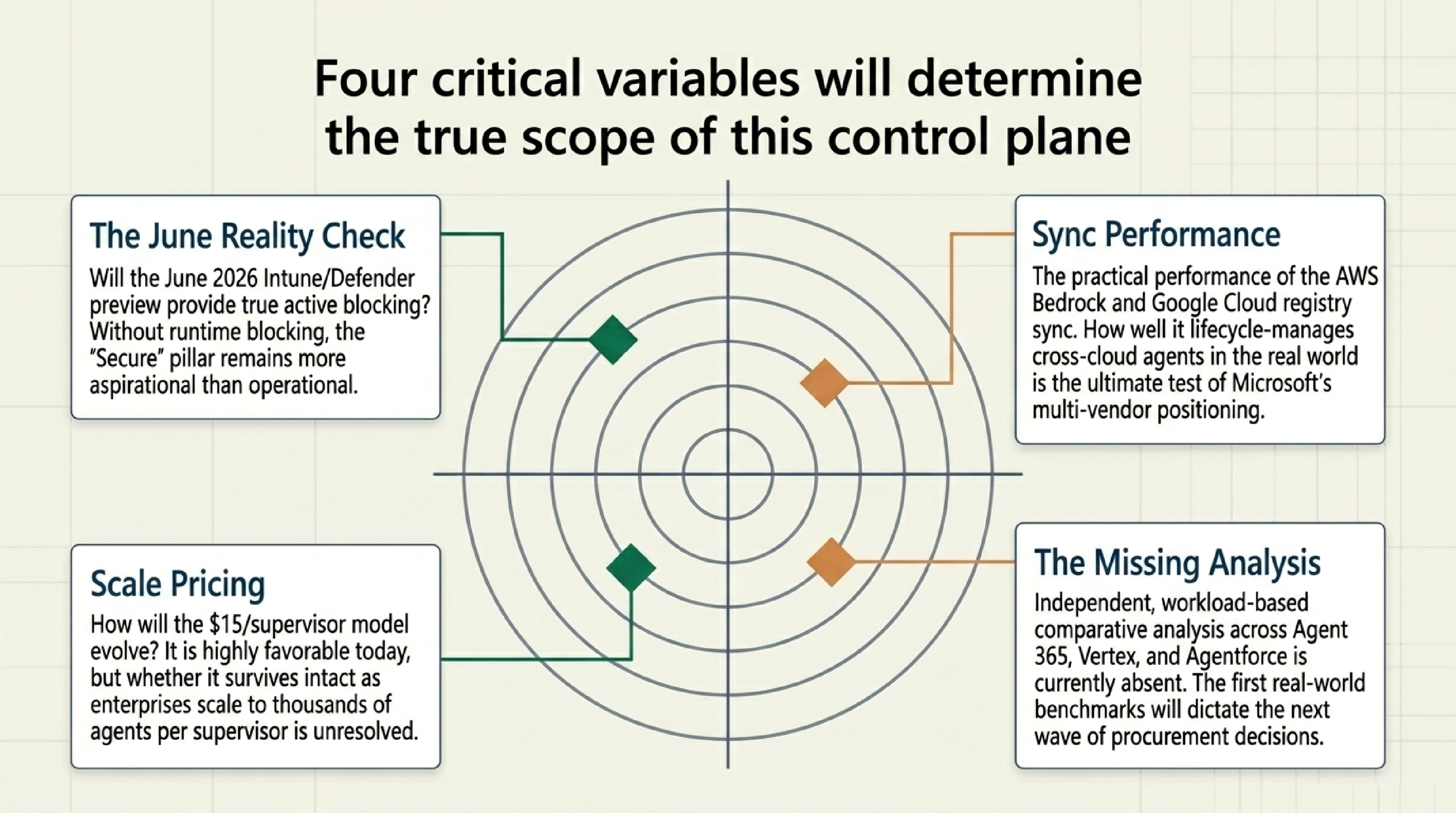
Several questions about Agent 365 remain open and worth tracking. The June 2026 public preview of Intune and Defender runtime enforcement will determine whether Agent 365 is a real enforcement plane or primarily an inventory tool. Without runtime blocking, the “secure” pillar is more aspirational than operational. The Bedrock and Google Cloud registry sync practical performance — how well it actually inventories and lifecycle-manages cross-cloud agents — is the most informative test of Microsoft’s multi-vendor positioning. Pricing evolution as agent topologies scale is also unresolved: the per-supervising-human pricing model is favorable for high-leverage topologies today; whether it stays that way as enterprises operate thousands of agents per supervisor is an open question. And independent comparative analysis across Agent 365, Vertex AI Agent Governance, Bedrock’s agent infrastructure, and Salesforce Agentforce on real enterprise workloads is essentially absent from public literature — first such analysis would meaningfully inform procurement decisions.
The most useful near-term signals: the June 2026 Intune/Defender preview, customer case studies from Microsoft on Agent 365 deployments at scale, Vertex AI Agent Governance and AWS Bedrock equivalent feature announcements, and any state or federal regulatory action that requires agent-specific governance documentation. Each is independently observable.
How we use AI and review our work: About Insightful AI Desk.