Hermes Agent: The Complete In-Depth Guide to the Self-Improving AI Agent Redefining Autonomous Intelligence in 2026
Introduction: Why Hermes Agent Has Become the Most Important AI Agent of 2026
The artificial intelligence landscape in 2026 has undergone a profound transformation. We have moved past the era of stateless chatbots that forget every conversation, beyond simple coding copilots tethered to a single IDE, and far away from cloud-locked assistants that hold user data hostage behind opaque APIs. At the very forefront of this new wave stands Hermes Agent, an open-source autonomous AI agent built by Nous Research that has captured the imagination of developers, researchers, and enterprises around the world. Within just two months of its February 2026 launch, Hermes Agent surpassed 60,000 stars on GitHub, making it the fastest-growing open-source project in the AI agent space of 2026. By early April, that number had climbed past 110,000 stars, and by May 2026 it had crossed well over 135,000 stars on the official NousResearch/hermes-agent repository, a growth velocity rarely seen in any developer-focused open-source project.
What makes Hermes Agent so revolutionary is not merely its impressive growth numbers or its expansive feature list. It represents a fundamental architectural shift in how we think about artificial intelligence agents. Rather than treating each conversation as an isolated event that resets to zero the moment a session ends, Hermes Agent introduces the concept of a persistent, continuously learning entity that lives on your own infrastructure, remembers what it has learned across days, weeks, and months, and genuinely gets smarter the longer you use it. It is, as Nous Research themselves describe it, "the agent that grows with you."
This in-depth article will examine everything you need to know about Hermes Agent in 2026. We will explore its origins, its uniquely designed architecture, its core capabilities, its real-world use cases, how it compares to competing frameworks like OpenClaw, the security considerations every adopter must understand, the wide range of deployment options it supports, and the broader implications it carries for the future of autonomous AI systems. Whether you are an enterprise architect evaluating new AI infrastructure, a developer looking for a smarter personal assistant, a researcher studying agentic systems, or simply curious about where the field of AI is heading next, this comprehensive guide aims to give you a complete understanding of what Hermes Agent is and why it has so quickly become essential reading in 2026.
For readers who want to install the agent right away, you can jump directly to the official Hermes Agent documentation and follow the quickstart. For everyone else, let us begin with the story of how Hermes Agent came to be.
The Origins of Hermes Agent: The Story of Nous Research
To understand Hermes Agent, you must first understand the organization that created it. Nous Research is one of the most respected AI research laboratories in the open-source community, well known for its work on the Hermes, Nomos, and Psyche model families. These foundational models have powered countless downstream applications and have been celebrated in particular for their strength in function calling, structured tool use, and instruction following — three competencies that turn out to be foundational to building reliable agents.
In late 2025 and early 2026, the open-source AI community had reached an interesting inflection point. Coding copilots like Claude Code, Cursor, and Aider had become indispensable, but every developer who used them daily had experienced the same frustration: you spent hours teaching the agent the quirks of your codebase, the naming conventions, the deployment pipeline, and the legacy database schema nobody had documented, and then you closed the session and most of that context was gone. Workarounds emerged. Some developers wrote elaborate CLAUDE.md files. Others maintained sprawling memory directories. One developer famously documented 59 context compactions across 26 days of daily Claude Code use before finally building his own persistence layer from scratch.
Around the same time, OpenClaw, the breakout open-source agent framework of late 2025 created by Peter Steinberger, had proven that developers genuinely wanted agents that outlive their browser tabs. OpenClaw demonstrated the appetite for persistent, multi-platform assistants — but security incidents and architectural decisions also exposed the limits of that approach. Tens of thousands of publicly exposed OpenClaw instances, a critical token-exfiltration CVE rated 8.8 on the CVSS scale, and 341 malicious skills discovered in a single ClawHub audit made it clear that the next-generation framework needed to take a fundamentally different posture.
This is the moment Nous Research stepped in. Released in February 2026 under the MIT license on the official GitHub repository, Hermes Agent was designed from day one not as a session-bound tool or a thin wrapper around a single API, but as a long-lived agent runtime built around a closed learning loop. Where OpenClaw had prioritized ecosystem breadth and integration count, Hermes Agent prioritized depth of learning, quality of memory, and tighter operational controls. The result, as several independent reviewers have noted, is the first open-source agent where the phrase "the agent learned that" actually points to a file you can open and read.
What Exactly Is Hermes Agent? A Clear Definition
At its core, Hermes Agent is an open-source, self-hosted, autonomous AI agent framework built around a closed learning loop. Let us unpack each part of that definition because every word in it is doing real work.
Open-source: Hermes Agent is released under the MIT license, one of the most permissive open-source licenses in existence. You can use it, modify it, fork it, and even build commercial products on top of it without paying anyone or asking permission. The entire codebase, including all of its skills, plugins, and supporting infrastructure, is freely available on GitHub and audited by 200+ contributors.
Self-hosted: Hermes Agent runs on your own infrastructure. That can be a five-dollar VPS, a beefy GPU cluster, a Raspberry Pi on your desk, or serverless infrastructure like Daytona or Modal that costs nearly nothing when idle. All of your data — memories, skills, conversation history, user model — is stored in a local SQLite database on your own machine. Nothing passes through any third-party cloud service unless you explicitly route it there. This complete data sovereignty makes Hermes Agent particularly attractive to enterprises with strict compliance requirements and to individuals who simply do not want their personal AI assistant phoning home to an unaccountable provider.
Autonomous: Hermes Agent is not a chatbot that waits for you to ask the next question. It is an agent that runs persistently, can act on schedules, can spawn subagents to handle parallel workstreams, can browse the web, execute shell commands, manage files, and interact with external APIs through MCP (Model Context Protocol) integrations. You can give it long-running goals and walk away while it works.
Built around a closed learning loop: This is the part that genuinely sets Hermes apart from every other framework on the market. Every other agent framework, including OpenClaw and the LangChain-based ecosystem, treats task execution as the terminal step. Task in, plan, execute, return result, session ends. Hermes Agent adds a layer after execution. It evaluates what happened, extracts reusable patterns, writes them as durable skill documents, refines those skills during subsequent use, and updates a deepening model of who you are as a user across sessions. The more you use it, the better it gets at exactly the tasks you actually do.
The Closed Learning Loop: Hermes Agent's Defining Innovation
If there is one thing that justifies choosing Hermes Agent over any other open-source agent framework available in 2026, it is the closed learning loop. This is the central architectural innovation, and it deserves a section of its own.
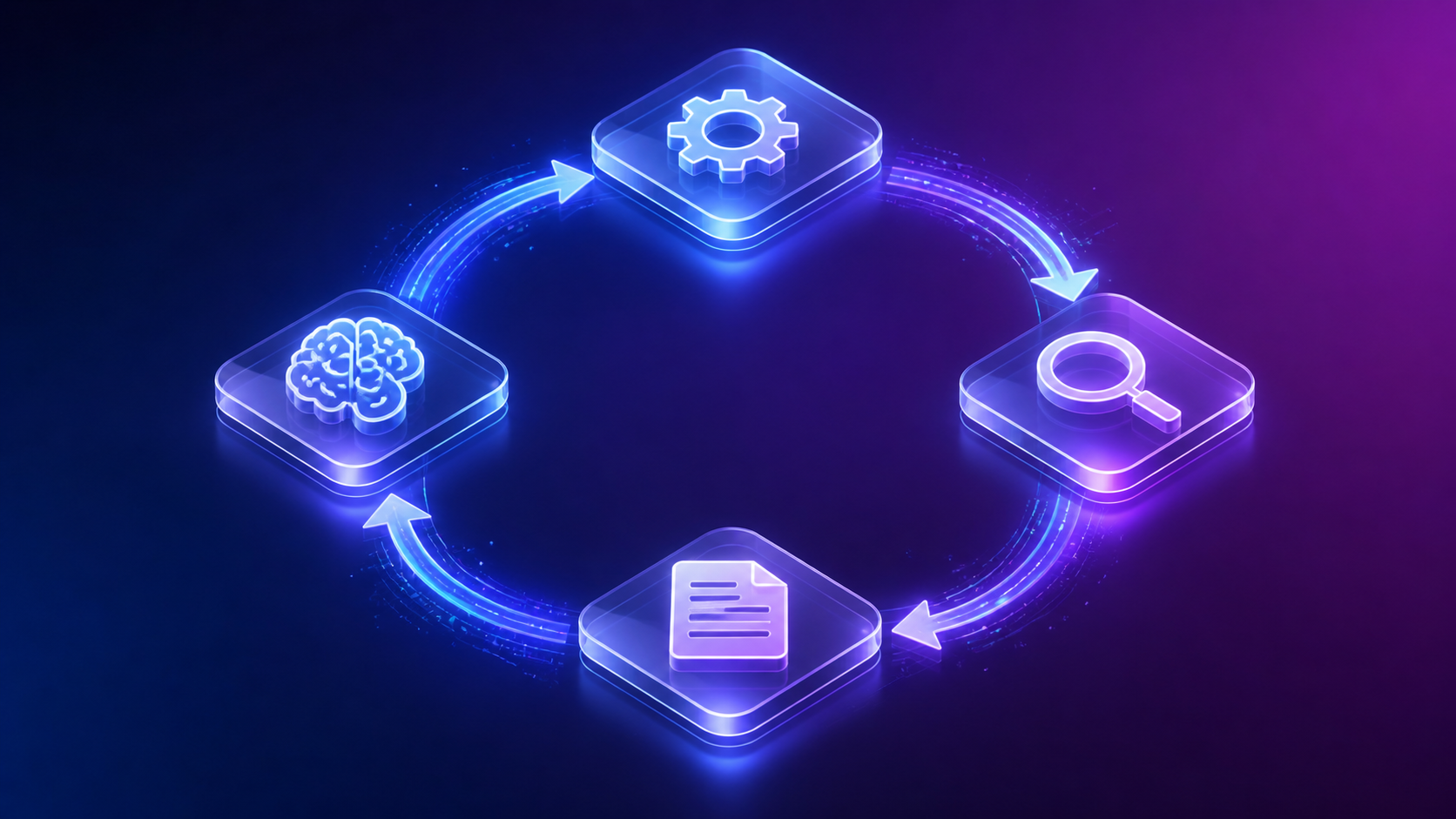
The learning loop has four interconnected components:
1. Persistent Memory. Hermes Agent maintains an agent-curated memory store that persists across every session, every restart, and every deployment migration. The memory is stored in a local SQLite database with full-text search powered by SQLite's FTS5 extension, augmented by LLM-driven summarization that compresses long-running conversation histories into searchable artifacts. Periodic nudges in the agent loop prompt the agent itself to commit important new information to durable memory rather than letting it slip away with the next context compaction.

2. Autonomous Skill Creation. This is the part that genuinely impressed early reviewers. After Hermes Agent completes a non-trivial task (typically defined as five or more tool calls in sequence), it automatically analyzes what it did, identifies the reusable pattern, and writes a structured Markdown skill document capturing the workflow as a reusable procedure. These skill documents follow the open agentskills.io standard, which means they are portable across compatible agents, human-readable, and shareable. The next time a similar task arises, the agent searches its skill library, loads the relevant skill, and applies the prior reasoning rather than starting from scratch.
3. Skill Self-Improvement. Skills are not static. As new evidence arrives and new outcomes accumulate, Hermes Agent refines existing skills, updating them when a better approach consistently outperforms the previously stored one. Skills evolve. They get sharper, more targeted, and more accurate over weeks and months of use. This is the core promise of "the agent that grows with you" — your library of skills is unique to the work you actually do, not a generic marketplace bundle.

4. User Modeling via Honcho Dialectic. The most underrated component of the loop is the user model. Hermes Agent uses an integration with Honcho, a dialectic user-modeling system, to build a running representation of who you are: your preferences, your decision history, your communication style, your typical task patterns, your domain expertise. This means the agent gradually stops asking you the same clarifying questions over and over, gradually stops re-explaining itself in ways you have already pushed back on, and gradually starts anticipating what you actually want.
The combination of these four elements produces a qualitative change in the experience of using an AI agent. Independent reviewer Sathish Raju summarized it bluntly after switching from OpenClaw to Hermes: after twenty or so self-generated skills had accumulated in his domain, the time he spent on recurring task categories dropped by roughly forty percent. The learning loop, in other words, is not marketing copy. It is measurable.
Core Capabilities of Hermes Agent: A Deep Feature Tour
Beyond the learning loop, Hermes Agent ships with a remarkably broad feature set out of the box. Let us walk through the most important capabilities in detail.
Multi-Platform Gateway: Reach Your Agent From Anywhere

One of the design principles behind Hermes Agent is that an agent should live where you live. Most people do not spend their day inside a terminal. They are on Telegram during their commute, on Slack at work, on Discord in their gaming downtime, on WhatsApp with family, on Signal for sensitive conversations. Hermes Agent ships with a single gateway process that connects to 20+ messaging platforms from a single deployment, including Telegram, Discord, Slack, WhatsApp, Signal, Matrix, Mattermost, Email, SMS, DingTalk, Feishu, WeCom, Weixin, QQ Bot, Yuanbao, BlueBubbles, Home Assistant, Microsoft Teams, and Google Chat.
This is genuinely transformative for how you interact with an autonomous agent. You can fire off a task from Telegram while you are on the train, watch a status update appear in Slack when it completes, and have the final report dropped into your email inbox — all from a single Hermes Agent instance running on a cheap VPS somewhere. The agent reaches you wherever you happen to be, and conversation context is unified across channels.
Six Terminal Backends: Run Anywhere From a Laptop to Serverless
Hermes Agent supports six distinct terminal backends, each suited to a different deployment scenario:
- Local: Runs directly on the host machine. Ideal for personal use on a laptop or workstation.
- Docker: Runs inside a Docker container with namespace isolation, capability dropping, and a read-only root filesystem by default. The most popular choice for self-hosted server deployments.
- SSH: Runs on a remote machine accessed over SSH. Lets you keep your agent on a beefy server while controlling it from anywhere.
- Daytona: Serverless development environments that hibernate when idle. Cost-efficient and ideal for agents that run on cron schedules.
- Singularity: HPC-style execution for research clusters. Particularly relevant for academic users running large-scale agent experiments.
- Modal: Another serverless option, with strong support for parallel batch execution and GPU-backed tasks.
The Daytona and Modal backends are particularly noteworthy because they offer serverless persistence — your environment hibernates when idle, costing nearly nothing, and wakes up when you message the agent. This makes it economically feasible to run a personal AI agent 24/7 without paying for a constantly-on server.
200+ Model Support and Mid-Session Model Switching
Hermes Agent supports more than 200 large language models through native providers and through OpenRouter. Unlike most agent frameworks, which require a config change and a restart to switch models, Hermes Agent supports a /model slash command that switches the active model mid-session. This is significant for cost optimization: you can use a cheap, fast model for simple tasks and switch to a more capable model for complex reasoning, all within a single conversation.
Hermes Agent also supports multi-model routing, where different tools or task types can be assigned to different models. For example, you might route web search and content extraction tasks to a cheap model, while routing code generation and architectural reasoning to a top-tier frontier model. Properly tuned, this can reduce API costs by up to 90% compared to using a single frontier model for everything.
MCP Integration and 40+ Built-In Tools
Hermes Agent ships with more than 40 built-in tools, covering the most common agent capabilities: web search, web browsing through headless Chrome or Browserbase, content extraction via Firecrawl, vision and image analysis, file handling, persistent shell access, terminal execution, batch processing, scheduled automation through cron, and many more. On top of this, Hermes Agent has native Model Context Protocol (MCP) integration, which means it can connect to any MCP-compliant external tool or service. The MCP ecosystem in 2026 covers everything from GitHub and Notion to Slack and custom enterprise APIs, so the practical capability surface is enormous.
Subagent Delegation: Parallel Workstreams Without Context Pollution
For complex tasks that involve multiple parallel workstreams, Hermes Agent can spawn child subagents, each with its own isolated context and terminal. This lets you run, for example, three parallel research workstreams without their findings contaminating each other's reasoning. Subagents report back to the parent agent with structured results, which the parent then synthesizes.
Checkpoint System and Rollback
One feature that has won over a lot of skeptical reviewers is the checkpoint system. Before Hermes Agent touches files on your filesystem, it snapshots the working directory. If something goes wrong — a bad rewrite, an unintended deletion, a regression — you simply type /rollback and the state is restored. After eighteen months of watching agents quietly corrupt codebases, several reviewers have described this as a non-negotiable safety feature.
Voice Mode and Multi-Modal Capabilities
Hermes Agent supports voice mode, both for input and output, with native integration into Discord voice channels. Combined with vision capabilities for image analysis, this turns Hermes Agent into a genuinely multi-modal assistant rather than a text-only chatbot.
Cron-Based Automation
Hermes Agent has built-in support for cron-style scheduling. You can configure recurring automations — daily reports, weekly summaries, hourly system checks, monthly audits — and the agent will execute them autonomously, delivering results to any of its messaging platforms.
Profiles and Multi-Instance Support
A single Hermes Agent installation can run multiple "profiles" simultaneously, each with its own memory, skills, and configuration. This is useful for separating personal and work agents, or for running different agents on the same machine for different family members, without their data mingling.
Fallback Providers and Resilience
When an LLM provider goes down or rate-limits you, Hermes Agent can automatically failover to a configured backup provider. This resilience pattern is critical for production deployments where downtime is unacceptable.
Hermes Agent vs. OpenClaw: The Defining Comparison

Any honest analysis of Hermes Agent in 2026 must include a direct comparison with OpenClaw, the other dominant open-source agent framework. The two projects overlap substantially on the surface — both are open source, both are self-hosted, both connect to your messaging platforms, both execute tools, both maintain some form of memory. But their underlying philosophies diverge sharply, and choosing the wrong one for your use case means spending months fighting the framework instead of building with it. For a detailed head-to-head, the analysis from The New Stack is one of the best independent treatments available.
The cleanest way to summarize the difference, borrowed from a Kilo AI comparison blog, is this: Hermes Agent packages a gateway around a learning agent. OpenClaw packages an agent around a messaging gateway. That distinction is abstract, but it has concrete consequences for everything from setup complexity to long-term cost to security posture.
Architecture Comparison
OpenClaw is gateway-centric. Its core architectural concern is the connection layer — how it routes messages between LLM providers, messaging platforms, and tool integrations. The agent loop itself is, comparatively, a thin layer that sits on top of this routing infrastructure.
Hermes Agent is runtime-centric. Its core architectural concern is the agent loop, with the learning cycle as a first-class component. The gateway, messaging platforms, and tool integrations are services that wrap around the agent rather than the other way around.
Memory Comparison
OpenClaw maintains transparent file-based memory — primarily Markdown files stored in well-known directories that the agent reads and writes during each session. This is auditable and human-readable, but it is also static. Memories do not refine themselves or evolve.
Hermes Agent maintains agent-curated memory in a SQLite database with FTS5 full-text search and LLM summarization. The agent actively decides what to remember, periodically prompts itself to commit important new information, and refines memory entries over time. The trade-off is that the memory is less directly inspectable by humans, though Hermes provides slash commands for browsing and editing memory.
Skill Comparison
OpenClaw's skill ecosystem is the largest in the open-source agent world — ClawHub hosts more than 13,700 community-built skills covering everything from email automation to obscure API integrations. The catch is that ClawHub is also a supply-chain attack vector: a Koi Security audit of 2,857 ClawHub skills found 341 malicious entries, 335 of them tied to a single coordinated campaign.
Hermes Agent has a smaller community skill library, but it sidesteps the supply-chain attack vector entirely. Most Hermes skills are self-generated rather than downloaded from a marketplace. The agent writes skills based on its own experience with your tasks, so there is no centralized repository through which malicious packages can be distributed. This is a meaningful security advantage for users who care about defense in depth.
Security Comparison
OpenClaw has had a rough 2026 on the security front. Multiple critical CVEs have been disclosed, including CVE-2026-25253 (token exfiltration, CVSS 8.8), prompt injection vulnerabilities, and even remote code execution issues. SecurityScorecard reported tens of thousands of publicly exposed OpenClaw instances.
Hermes Agent, as of May 2026, has zero reported agent-specific CVEs. However, this number must be read with care. Zero CVEs does not mean inherently more secure — it also means less deployment exposure and less attacker attention. Hermes is younger and has had less time to accumulate discovered vulnerabilities. That said, Hermes ships with more conservative defaults out of the box: container hardening, read-only root filesystems, dropped Linux capabilities, namespace isolation for subagents, filesystem checkpoints, and a pre-execution scanner for terminal commands. Neither framework should be exposed directly to the public internet without a serious security review.
Migration Path
Notably, Hermes Agent ships with a built-in hermes claw migrate command that performs an interactive, agent-guided migration from an existing OpenClaw installation, including dry-run previews of what will change. This is a direct competitive statement from Nous Research and signals that they expect a meaningful portion of their user base to be OpenClaw migrants.
When to Choose Which
Choose Hermes Agent if you use your agent daily for similar categories of recurring tasks (weekly code reviews, recurring research workflows, repetitive document analysis), if you want simpler setup, if you care about better default security, if cross-session learning matters to your workflows, or if you want an agent that becomes meaningfully more aligned with your preferences over months of use.
Choose OpenClaw if you need 24+ messaging platform integrations from a single agent, if you are deploying for a team where ecosystem breadth matters more than per-instance learning, if you value transparent file-based memory, if you specifically need the kind of mature multi-agent orchestration that OpenClaw's longer history provides, or if you have already invested significant time in the ClawHub skill ecosystem.
Run both if your workload genuinely splits cleanly between OpenClaw as orchestrator (for planning, coordination, and broad integration reach) and Hermes Agent as execution specialist (for repeated workflows that benefit from the learning loop). The SwarmClaw bridge project provides explicit orchestration between the two via the ACP protocol.
Real-World Use Cases: What People Actually Build With Hermes Agent

Theoretical capabilities are interesting, but the real test of an AI agent framework is what people actually build with it. Here are the most common and most compelling use cases observed in the Hermes Agent community after its first three months.
Developer Automation and Always-On Coding Partner
This is the flagship use case and the one most commonly discussed. Developers install Hermes Agent on a cheap VPS, point it at one or two repositories, give it access to a Telegram or Discord channel, and let it accumulate skills. Over the course of a month, the agent learns the codebase conventions, the deployment quirks, the testing strategy, and the architectural style. The next time you ask it to add a feature, it does not need to be re-onboarded. It already knows.
Specific tasks include: weekly automated code reviews that flag regressions and architectural drift, daily test failure analysis and triage, security audit reports, dependency upgrade evaluation, performance regression detection, and recurring refactoring sweeps. The learning loop is most visible here — what starts as a generic code reviewer becomes a specialist in your codebase.
Personal AI Assistant with Persistent Memory
For non-developers and developers alike, Hermes Agent functions as a personal assistant that genuinely remembers you. Tasks include: managing email inboxes, summarizing long documents into briefs, scheduling and follow-ups, research synthesis across multiple sources, financial tracking, fitness logging, journaling assistance, and life-administrative tasks like coordinating appointments and managing recurring obligations. Because the agent maintains a user model, it learns over weeks what level of detail you want in summaries, what tone you prefer in drafts, and what kinds of suggestions you tend to act on versus ignore.
Research and Analysis Workflows
Hermes Agent is particularly strong for researchers, analysts, and journalists who do repeated information-gathering work. The agent can be given recurring research mandates — track this competitor, monitor this regulatory space, summarize this academic field weekly — and over time it learns which sources you trust, which framings you find useful, and how you want findings structured.
Team Collaboration Through Slack and Discord
For small teams that cannot justify dedicated AI infrastructure spend, Hermes Agent provides a self-hosted way to add agentic AI capabilities to existing Slack or Discord workspaces. Connect the gateway, configure a few team-specific skills, and the agent becomes a shared resource that learns the team's conventions and serves as institutional memory.
RL Training Data Generation and Research
This is a use case unique to Hermes Agent in the open-source space. Because the project was built by a model-training lab, it is designed from day one to be a platform for generating training data, running reinforcement learning experiments, and exporting agent trajectories for fine-tuning. Through native Atropos integration, researchers can generate thousands of tool-calling trajectories in parallel with automatic checkpointing, configurable workers, batch sizes, and toolset distributions. This makes Hermes Agent a serious tool for the RL-on-agents research direction, not just an end-user assistant.
Long-Form Content Generation
The companion autonovel project built on Hermes Agent demonstrates the framework's capacity for autonomous long-form content generation. Autonovel can generate manuscripts of 100,000 words or more end-to-end using the agent loop, with the learning loop helping it maintain consistency in voice, character, and plot logic across the span of a full-length novel.
Home Automation Through Home Assistant Integration
Through the Home Assistant gateway, Hermes Agent can interact with smart home devices, sensors, and automation rules. Combined with voice mode and persistent memory, this opens up genuinely interesting possibilities for adaptive home automation that learns your routines.
Installation and Getting Started: From Zero to Productive
One of the things that has driven Hermes Agent's adoption velocity is how genuinely simple it is to get up and running. The project supports Linux, macOS, and Windows via WSL2, with no manual prerequisite installation required.
The fastest path is a single curl command:
curl -fsSL https://raw.githubusercontent.com/NousResearch/hermes-agent/main/install.sh | bash
This script handles dependency installation, environment setup, and configuration scaffolding automatically. On macOS, you can alternatively use Homebrew: brew install hermes-agent. On Linux or WSL2, pip install hermes-agent works as well.
After installation, you run hermes init to configure your LLM provider, choose your messaging channels, and set up your first profile. Then you can start the terminal UI with the hermes command, or run the gateway with hermes gateway and start talking to the agent from Telegram or any other configured platform.
The official documentation covers the full configuration surface, including how to set up MCP servers, how to install community skills, how to configure cron schedules, and how to migrate from OpenClaw.
For developers who want to contribute, the project provides a setup-hermes.sh script that handles the full development environment setup: cloning the repo, installing uv, creating a virtual environment, installing the project with all extras, and symlinking the executable.
Plugin System and Extensibility
Hermes Agent is designed to be extensible from the inside out. The plugin system supports four primary hook points in the agent loop: pre_llm_call, post_llm_call, on_session_start, and on_session_end. These hooks fire in both the agent loop itself and in the CLI/gateway, making the plugin system fully complete across both interfaces. Plugins can also register slash commands and extend the TUI (terminal user interface).
This means you can write custom plugins that intercept and modify LLM calls, inject custom context, log specific events, integrate with third-party observability platforms, or extend the user interface with new commands. The plugin API is simple, well-documented, and well-suited to small custom integrations that do not deserve their own MCP server.
On top of the plugin system, Hermes Agent supports a growing ecosystem of community-contributed skills (collected in the awesome-hermes-agent repository), MCP server integrations, and tool packages. The recommended starting path for new users is to follow the official quickstart, install the wondelai/skills package for a solid baseline skill set, and then let the agent generate its own custom skills as it works on your specific tasks.
Security Considerations: What Every Adopter Must Understand
No production deployment of any agent framework should be undertaken without serious security review, and Hermes Agent is no exception. The framework's design includes meaningful security advantages over alternatives, but it also presents new attack surfaces that adopters must understand.
Default-secure posture. Hermes Agent ships with container hardening, read-only root filesystems where possible, dropped Linux capabilities, namespace isolation for subagents, filesystem checkpoints with rollback, and a pre-execution scanner that inspects terminal commands before they run. These defaults are stronger than most competing frameworks.
Local-first data storage. Because all memory, skills, and conversation history are stored in a local SQLite database on the user's own machine, there is no centralized cloud honeypot for attackers to target. Compromising one user's deployment does not compromise anyone else's.
No marketplace supply chain. Since most Hermes skills are self-generated rather than downloaded from a community marketplace, the framework sidesteps the kind of supply-chain attack that hit OpenClaw's ClawHub. There is no centralized package repository through which malicious skills can propagate.
Zero reported CVEs as of May 2026. This is encouraging but not a guarantee. Hermes Agent is younger and has had less deployment exposure than OpenClaw, so the absence of reported vulnerabilities reflects less attacker attention as much as it reflects better security engineering.
Remaining considerations. Any agent that can execute shell commands and access the network represents a substantial attack surface if compromised. Prompt injection remains a real risk — if Hermes Agent reads malicious content that contains agent instructions, those instructions could potentially influence its behavior. The pre-execution command scanner mitigates the worst cases, but it is not a silver bullet. Production deployments should run Hermes Agent on hardened infrastructure with network segmentation, access controls, audit logging, and aggressive patching schedules. The gateway process should never be exposed directly to the public internet.
For regulated environments, the local-first architecture and MIT license make compliance review more tractable than for cloud-based agent providers, but a formal review is still required for environments subject to HIPAA, PCI-DSS, SOC 2, or similar frameworks.
The Broader Ecosystem: What Surrounds Hermes Agent
A framework lives or dies by its ecosystem, and the Hermes Agent ecosystem has grown remarkably fast. The awesome-hermes-agent curated list tracks the most important projects in the space. Highlights include:
- autonovel by Nous Research: autonomous novel-writing pipeline built on the Hermes Agent loop.
- hermes-paperclip-adapter by Nous Research: lets Hermes run as a managed employee inside Paperclip companies, connecting the agent to a task management and governance system.
- hermes-agent-self-evolution by Nous Research: a research pipeline that uses DSPy and GEPA (Genetic Evolution of Prompt Architectures) to evolutionarily improve Hermes's own prompts and behaviors.
- SwarmClaw: an orchestration project that bridges Hermes Agent and OpenClaw, letting teams use each for what it does best.
- ChatBotKit Reference Architecture: an inspired-by-Hermes architecture for ChatBotKit users who want similar capabilities without self-hosting. See the reference architecture writeup for details.
The community itself is split between an active English-language Discord, lively Chinese-language forums, regular Reddit discussion on r/hermesagent and the cross-pollinating r/openclaw, and biweekly release cadences from the core team at Nous Research.
Cost and Economics: What Does Running Hermes Agent Actually Cost?
This is a question more people should ask before committing to any agent framework, because running an autonomous AI agent can get expensive quickly if you are not careful. The most important fact is that every message Hermes Agent sends to its LLM provider includes the full conversation history, which means costs compound within a session. Long-running sessions with many tool calls can rack up substantial token bills.
That said, Hermes Agent provides several mechanisms to keep costs manageable:
Multi-model routing. Route cheap tasks to cheap models. Studies of real deployments suggest 60–90% API cost reductions are achievable with proper routing configuration.
Serverless backends. Daytona and Modal hibernate when idle, so you only pay for compute during active sessions. For an agent that runs cron-scheduled tasks a few times per day, the monthly cost can be a couple of dollars rather than the constant cost of a 24/7 VPS.
Local model option. For users with their own GPU, Hermes Agent supports local model inference through Ollama and similar runtimes, eliminating per-token API costs entirely (at the cost of significantly slower throughput unless you have serious hardware).
Conversation summarization. The built-in LLM summarization compresses long conversation histories into shorter context, reducing the per-message token cost.
For a typical solo developer running Hermes Agent on a small VPS with a routed model mix, costs typically settle in the $20–$60 per month range depending on usage intensity. For heavy users running many tool-call-intensive workflows, that number can climb into the low hundreds per month. For research workloads generating training data at scale, costs scale linearly with trajectory count and should be budgeted accordingly.
Performance Benchmarks and Real-World Metrics
Independent benchmarks of agent frameworks are notoriously difficult because performance depends heavily on the specific task, the underlying LLM, and how the framework is configured. That said, a few signal numbers are worth noting.
The Stanford HAI AI Index 2026 confirmed the broader 2025–2026 industry trend that AI agents moved from question-answering toward task completion, with measurable progress on agentic benchmarks across the board. Hermes Agent sits comfortably in the upper tier of open-source agent performance on common benchmarks like SWE-bench, WebArena, and OSWorld, though its strongest results emerge after the agent has accumulated 20+ self-generated skills in a domain.
The most consistent observation from real-world users is the 40% task-time reduction reported after roughly a month of daily use on the same category of tasks. This is the measurable signature of the learning loop — and it is the central practical reason to adopt Hermes Agent in 2026.
Common Criticisms and Honest Limitations
A balanced analysis must include the limitations. Hermes Agent is impressive, but it is not perfect, and adopters should know what they are getting into.
Operational surface is still maturing. Several reviewers, including the Medium reviewer at kisztof.medium.com, have noted that while the learning loop is the right idea, the operational tooling around code-critical deployments is not yet as polished as more mature tools like Claude Code. For mission-critical engineering workflows, waiting for a more battle-tested release or for an enterprise fork may be prudent.
Learning loop payoff requires patience. The benefits of the learning loop are real but take weeks to materialize. New users sometimes report disappointment in the first few days because, with only a handful of skills accumulated, the agent does not yet feel meaningfully different from a stateless one. The payoff curve is steep but delayed.
Community is smaller than OpenClaw's. OpenClaw has 345,000+ stars and 13,700+ skills versus Hermes Agent's 135,000+ stars. The ecosystem of plugins, integrations, and community knowledge is correspondingly smaller, though growing fast.
Documentation is improving but uneven. The official documentation is solid, but advanced topics like custom plugin development, fine-grained memory management, and large-scale RL training data generation are documented less thoroughly than the basics.
Less battle-tested security. As noted earlier, zero reported CVEs is encouraging but does not mean Hermes Agent has been more rigorously attacked than alternatives. The true security posture will become clearer over the next 12–18 months.
The Future Roadmap: Where Hermes Agent Is Going
Based on public statements from Nous Research, the active GitHub roadmap, and the velocity of recent releases, several directions are clear for Hermes Agent's future evolution.
Deeper self-evolution. The hermes-agent-self-evolution research pipeline suggests that future Hermes versions will increasingly optimize their own prompts and behaviors using evolutionary techniques. The line between user-driven configuration and agent-driven self-modification will continue to blur.
Better RL training data tooling. As Nous Research is fundamentally a model-training lab, improvements to the trajectory export, batch generation, and Atropos integration are likely priorities. Expect Hermes Agent to become the de facto open-source platform for agent RL research.
Enterprise edition. Given the rapid adoption and the unmet enterprise demand for self-hosted agentic AI, an enterprise-focused fork or commercial offering seems likely within the next 12 months. Audit logging, role-based access control, compliance attestation, and managed deployment are obvious additions.
Mobile-first gateways. The current gateway covers most major platforms, but native mobile clients (rather than messaging-platform proxies) would meaningfully change the user experience. Watch for announcements in this space.
Tighter Honcho integration. User modeling is the most underrated feature of Hermes Agent today. As the Honcho dialectic system matures, expect more sophisticated personalization that gradually disappears into the background of the user experience.
Conclusion: Why Hermes Agent Represents the Future
Hermes Agent is, as of mid-2026, the most architecturally ambitious open-source AI agent framework in existence. Its closed learning loop, persistent memory, autonomous skill creation, deep user modeling, multi-platform gateway, and broad deployment options together describe a category of system that did not really exist 18 months ago: a personal, always-on, self-improving AI agent that runs on your own infrastructure and genuinely gets smarter the longer you use it.
For developers, it is a productivity multiplier on recurring engineering tasks. For researchers, it is a serious platform for agentic RL experimentation. For enterprises, it offers self-hosted agentic AI without cloud lock-in. For individuals, it is the closest thing the open-source world has produced to a real personal AI — one that remembers you, learns from you, and works on your behalf even when you are not looking.
The framework is not yet perfect. The operational surface is still maturing, the community is smaller than OpenClaw's, and the security posture is encouraging but unproven at scale. But the architectural bet at the heart of Hermes Agent — that the next-generation AI agent should be a long-lived, learning, self-hosted entity rather than a stateless session-bound tool — is increasingly looking like the right bet for the second half of the decade.
If you have read this far, the practical recommendation is straightforward. Install Hermes Agent on a cheap VPS this week. Point it at one repository or one recurring workflow you actually do. Give it a Telegram channel and let it run for a month. Read the skills it writes. Delete the wrong ones. Keep the ones that save you time. After thirty days of daily use, you will have direct, personal evidence of whether the learning loop is real and whether the future of AI agents looks the way Nous Research thinks it does. Based on the experience of the developers, researchers, and reviewers who have already taken that bet, the answer is almost certainly yes.
The era of stateless AI is ending. The era of agents that grow with you has begun. And Hermes Agent, more than any other open-source project in 2026, is what that era looks like in practice.
Backlinks and Further Reading
For readers who want to go deeper, the following links are the most useful starting points across the Hermes Agent ecosystem and the surrounding research and analysis landscape.
Official Sources
- Hermes Agent Official Website — Marketing site, feature overview, install instructions
- Hermes Agent Official Documentation — Comprehensive technical documentation
- Hermes Agent GitHub Repository — Source code, issue tracker, contributor guide
- Nous Research — The AI research lab behind Hermes Agent
- Hermes Agent Documentation Mirror — Community-maintained documentation mirror
Community and Ecosystem
- awesome-hermes-agent — Curated list of skills, tools, and integrations
- agentskills.io — The open standard for portable agent skills
- Atropos — Reinforcement learning framework integrated with Hermes Agent
- OpenRouter — Multi-model routing provider supported natively by Hermes
- Model Context Protocol — The open standard Hermes uses for external tool integration
Independent Analysis and Reviews
- The New Stack: OpenClaw vs. Hermes Agent — Independent comparative analysis
- Kilo AI: Hermes vs. OpenClaw — When to reach for which agent
- MindStudio: What Is Hermes Agent? — Beginner-friendly overview
- MindStudio Comparison — Architectural comparison
- Hundred Tabs Honest Comparison — 2026 comparison based on 1,300+ community comments
- Pickaxe Personal Super-Agent Comparison — Personal AI infrastructure analysis
- Tencent Cloud Overview — Enterprise-perspective overview
- Petronella Cybersecurity Analysis — Security-focused comparison
- Medium Review by Kisztof — Long-form practitioner review
- Medium Migration Story by Sathish Raju — First-person migration account
- i-scoop Architecture Deep Dive — Detailed architectural analysis
- Lushbinary Developer Guide — Developer-focused setup guide
- AI Agent Store Listing — Capability summary and community opinions
- Kimi Resources Guide — Capability-focused overview
- Geeky Gadgets Comparison — Consumer-tech-perspective comparison
- OpenRouter Hermes Agent Listing — Provider-side description
- Hermes Agent Agency — Implementation services and use cases
- ChatBotKit Reference Architecture — Inspired-by-Hermes architecture
Industry Context
- Stanford HAI AI Index 2026 — Annual industry-wide AI progress report
This article was last updated in May 2026. Given the rapid pace of evolution in the AI agent ecosystem, some specific numbers (GitHub stars, CVE counts, skill ecosystem sizes) may have shifted by the time you read this. The underlying architectural arguments and the broader analysis remain accurate.
How we use AI and review our work: About Insightful AI Desk.